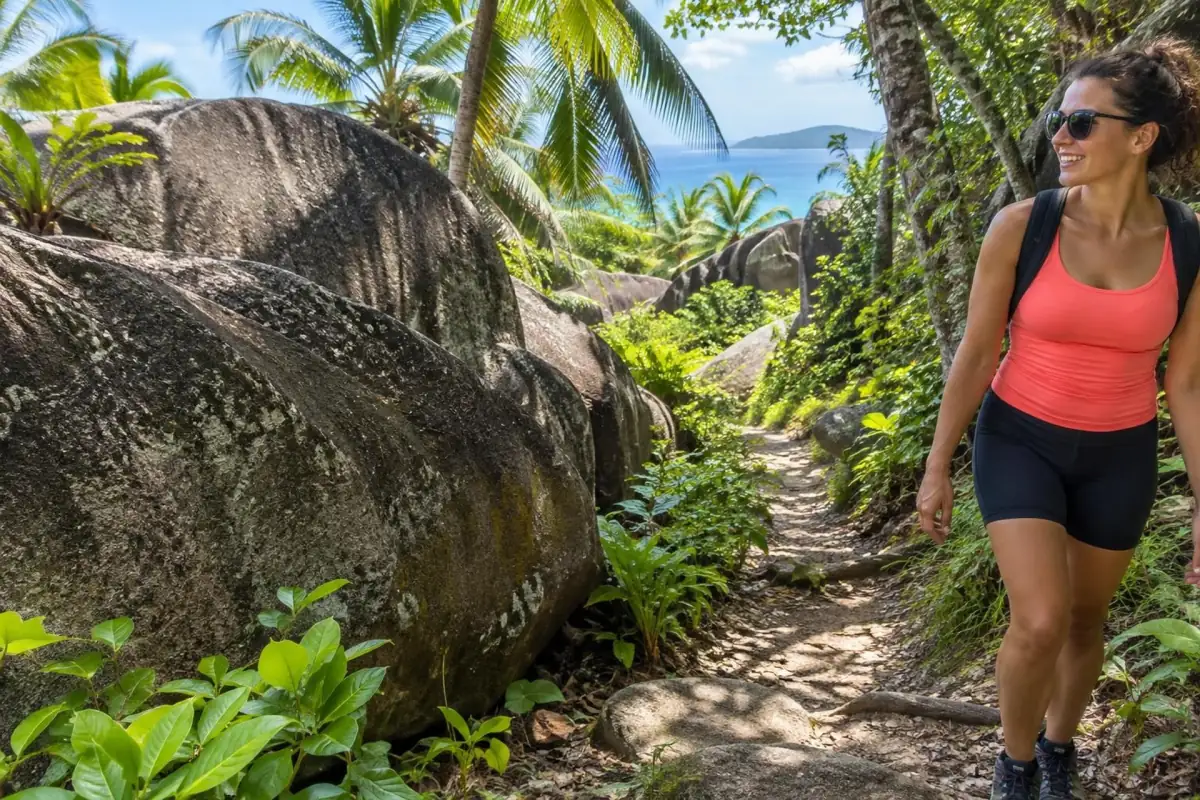
La Digue hiking: distinguish the routes
La Digue hiking needs a choice between different outings: a guided walk to Anse Marron, the coastal sequence beyond Grand Anse, or the Nid d’Aigle trail described from Belle Vue. Decide which landscape you want to experience before arranging transport to the start. A guide’s Anse Marron programme and a coastal walk towards Anse Cocos have different destinations.
Allow for heat, humidity and uneven ground. The historical park leaflets describe mud after rain on the coastal route and slippery rocks on the hill trail. Suitable footwear, a head covering and enough drinking water belong in your preparations. Ask about current local trail conditions and leave enough time to return without rushing rocky sections.


Anse Marron walks
Both walks are guided. Choose the fruit platter and safety briefing or the light lunch at Anse Marron.
Hand-picked tours, booked through GetYourGuide and Viator. Prices are indicative starting prices in US dollars (as of October 2026). Tap a tour for live availability and the current price in your currency.

Guided Anse Marron hike
- Licensed local guide
- Fresh tropical fruit platter
- Safety briefing
Make your own way to the meeting point and bring water and suitable shoes. L’Union Estate admission is extra.
Check availability →
Anse Marron nature walk
- Guided nature explanations
- Light lunch at Anse Marron
The guided walk includes explanations about the natural surroundings.
Check availability →Guided walks to Anse Marron
Choose an Anse Marron outing with a local guide and fruit platter or a guided nature walk with a light beach lunch. Arrange your journey to the stated meeting point.
Anse Marron with a guide
The small-group Anse Marron hike includes a licensed Seychellois guide, a safety briefing, a tropical fruit platter, local storytelling and photo stops at granite viewpoints. Meet at the Zil Air station by L’Union Estate in Anse Réunion and make your own way there. Bring drinking water, walking and water shoes, sun protection and a small waterproof bag for belongings. Estate admission is extra.
The guided nature outing starts at the Helicopter Pad and includes explanations about nature and a light lunch at Anse Marron beach. Its listed duration is 6 to 7 hours. This is a walking commitment to plan around, particularly if a ferry journey is part of your day. Arrange the meeting-point journey separately from the guided walk.
A reference to natural pools in an activity description should not decide whether you enter the water. Follow the guide’s briefing and the conditions encountered on the day. Concentrate on what the outing actually provides: guided hiking, coastal scenery and the stated refreshments. For a broader comparison with island days by bicycle or boat, use the La Digue tours guide.
Anse Cocos via Grand Anse and Petite Anse
The historical park leaflet available in the March 2022 file directory describes Grand Anse, Petite Anse, Anse Cocos and a continuation along the coast. The paved section ends at Grand Anse. Earthy and sandy ground, steps and rocky stretches follow over the hills, with mud possible after rainfall. Treat that description as background for planning and obtain current advice before setting out.
The same leaflet gives 2.52 km and 1.5 hours for the entire described Anse Caiman trail. Those figures belong to that route, rather than the isolated walk from Grand Anse to Anse Cocos. When deciding how much time you need, include your approach, stops and return instead of transferring a published trail figure to a different itinerary.
The beach safety guide published on 16 August 2022 identifies warning signs at Grand Anse, Petite Anse and Anse Cocos and warns about surf and rip currents. Respect warning signs and restrictions at the beach. A walk to a bay is not an assessment of swimming conditions, and rocks around a pool do not establish safety. Choose a shore stop without making a swim the condition for enjoying it.
Nid d’Aigle: the trail begins at Belle Vue
The historical park leaflet starts the Nid d’Aigle trail near the cafeteria at Belle Vue. Reaching this area involves a very steep paved road. Its published 1.06 km and approximately one hour apply to the described trail from Belle Vue, not the full journey from La Passe or a particular accommodation.
The leaflet describes a loop with some white route markings, warns about slippery rocks and advises staying on the main path because branches lead elsewhere. Separate the effort of reaching Belle Vue from the walk itself. If cycling is part of the approach, the bicycle guide helps with planning the road section and agreed collection arrangements.
Build the day around your starting point
Choose a walk first and then decide how to reach its start. A base near the harbour serves a different journey from a location on the west side or a steep approach towards Belle Vue. The accommodation location guide explains those geographical differences without assigning a universal walking time to each area.
For a day visit, include the outward crossing, the journey to the meeting point, the walk and the return to the jetty. Keep time for the ferry’s boarding and baggage requirements as well. The arrival guide covers the transport stages; walking time should remain a separate part of your plan.
Questions about walking on La Digue
Do these guided outings visit Nid d’Aigle?
The selected guided products go to Anse Marron. Plan Nid d’Aigle separately using the Belle Vue starting point and current local information about the trail.
Is the one-hour Nid d’Aigle figure measured from the harbour?
The historical leaflet gives approximately one hour for the described trail from Belle Vue. Add your own approach and return arrangements when deciding whether it fits your day.
Can a coastal walk include swimming?
Make that decision from current conditions and local warnings. The historical safety guide warns about surf and rip currents at Grand Anse, Petite Anse and Anse Cocos. Follow any restrictions and avoid treating a natural pool as a safety guarantee.