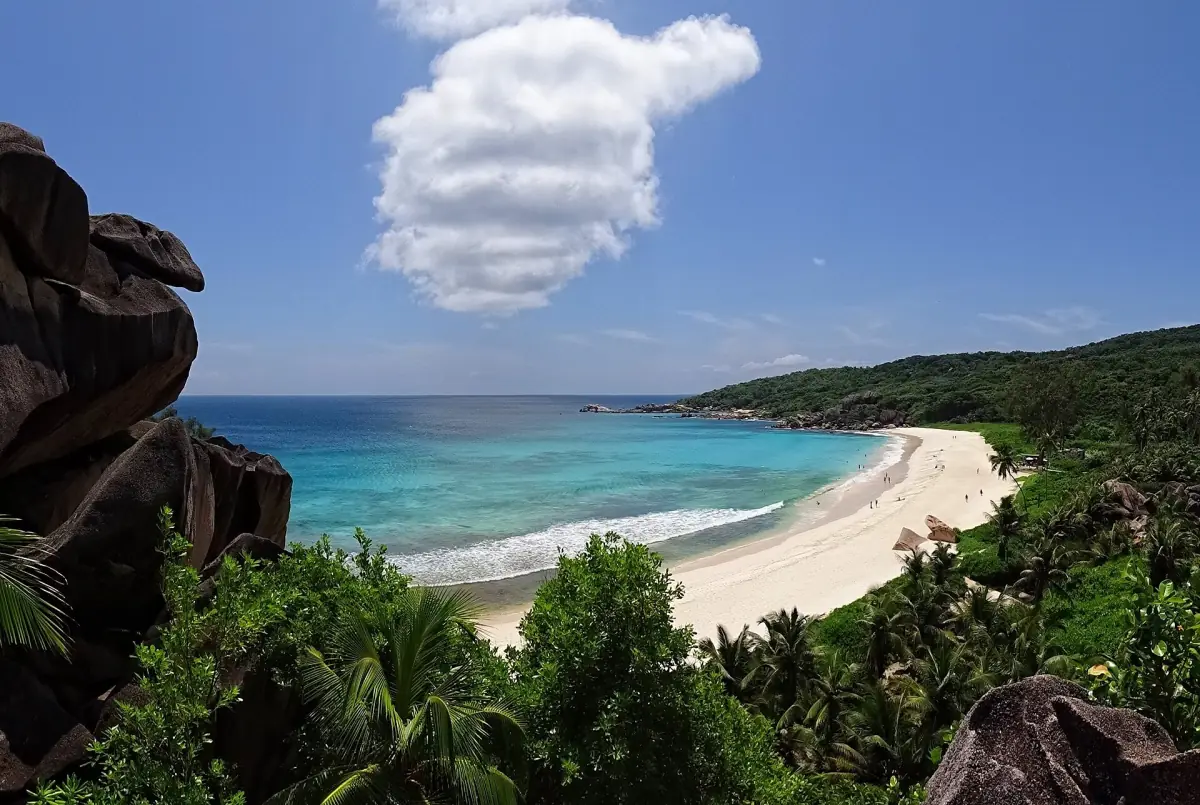
Choosing the best time to visit La Digue
The best time to visit La Digue is a question of priorities. Rainfall matters for paths and outdoor breaks; wind and sea conditions matter for ferries and snorkeling. Heat also affects a cycle ride or a climb towards Belle Vue. Choose the part of the trip you care about most, then leave room to change the order of activities once the daily forecast is available.
The Seychelles meteorological service describes January as the rainfall peak, April as a monsoon transition and August as particularly windy with rough seas. October typically becomes less windy, while November turns warmer with the onset of rain. These are seasonal descriptions rather than promises for a particular week. Even the wetter months can have sunny spells, so a monthly label alone gives an incomplete picture.

La Digue weather: what the monthly reference means
For a numerical reference, the older WMO climate table covers Seychelles International Airport on Mahé over 1981 to 2010, with data supplied on 1 February 2017. It is a regional planning reference from another island, rather than a local La Digue measurement series. Keep the station and period in mind when using it to compare months.
That Mahé airport reference gives January average monthly rainfall of 403.7 mm and July 89.1 mm. Average daily maximum temperatures are 31.6°C in April and 28.5°C in July. These are long-term averages, not the temperatures or rainfall promised for your dates. The figures help explain why choosing a less rainy period and choosing a less windy period can lead to different decisions.
Use those patterns to narrow down dates, then organise actual days with the current forecast. For a short visit, decide which activity can move if conditions change. For a longer island stay, keep a land-based alternative alongside a proposed boat day. The island sights guide gives ideas for an itinerary built around places rather than a rigid daily checklist.
Island day trip
This day trip includes island transport and a bicycle for exploring after arrival.
Hand-picked tours, booked through Viator. Prices are indicative starting prices in US dollars (as of October 2026). Tap a tour for live availability and the current price in your currency.


An island day with cycling and lunch
This day trip meets on the pontoon in front of Marine Charter on Mahé and includes transport after arrival on Praslin and La Digue, lunch and bicycle use. Plan outdoor time around the day's conditions.
Monsoon patterns, boats and snorkeling
A government climate overview last updated on 15 June 2015 describes the northwest monsoon from December to March and the southeast monsoon from May to October, with short transitions between them. This older overview describes typical seasonality. Treat the months as a broad pattern rather than fixed dates when the wind changes direction.
Less rain does not mean a still sea. The meteorological service describes August as the height of the southeast trade winds, with September still relatively windy. A trip around Coco, Félicité or the Sisters depends on the conditions that day. Route choices, water stops and snorkeling visibility should therefore remain flexible. The boat trip guide explains departure islands and routes; the snorkeling guide covers equipment and reef care.
Choose an outing for its actual activity and meeting point, then allow for changes to water plans. Keep the return crossing in mind as well as the excursion itself. For an arrival or departure day, the ferry and airport transfer guide separates the road journey, boarding requirements and sea leg so that a weather-sensitive crossing is not treated as a simple continuation of a flight.
Cycling, coastal walks and beach safety
For time on land, plan around heat as well as rain. The historic park trail leaflets supplied in March 2022 advise suitable shoes, a hat and enough water. They describe exposed coastal sections and high humidity. Leave room for breaks rather than treating a ride towards Grand Anse or an uphill approach towards Belle Vue as equivalent to an easy port-area outing.
Rain changes the footing too. The older coastal trail description notes sandy and earthy ground beyond Grand Anse that can become muddy, while the Nid d’Aigle leaflet warns of slippery rocks. Use these descriptions as background and check local conditions before setting out. Our walking guide distinguishes coastal routes from the guided Anse Marron outings.
Beach appearance is a separate issue from swimming suitability. The official Beach & Sea Safety Guide published on 16 August 2022 identifies warning signs at Grand Anse, Petite Anse and Anse Cocos, with hazards from surf and rip currents. Take those warnings seriously and follow signs on the day. A sunny sky or sheltered-looking patch between rocks does not establish a safe swimming area. The same historic guide advises ending water activities during a thunderstorm and snorkeling with company.
Questions about seasons on La Digue
Does the driest month also have the calmest sea?
Rainfall and sea conditions are different criteria. July is relatively dry in the older Mahé airport reference, while the meteorological service describes the southeast trade-wind period as windy, especially in August.
Are the climate figures measured on La Digue?
The numerical reference used here is Seychelles International Airport on Mahé, covering 1981 to 2010 with data supplied on 1 February 2017. Use it for regional context, then consult the daily forecast.
Can a rainy month still work for an island visit?
Wetter months can include sunny spells. Keep outdoor plans flexible, allow for slippery ground after rain and choose the day's activities according to wind, sea and local advice.
What does the day-trip offer include?
The included services are transport after arrival on Praslin and La Digue, lunch and use of a bicycle. The meeting point is the pontoon in front of Marine Charter on Mahé.